In pump stations, gate valves and check valves are more than mechanical components – they are essential for safety, maintainability, and asset protection. Decisions made during the design stage directly influence how safely and efficiently a pump station can be maintained throughout its operational life.
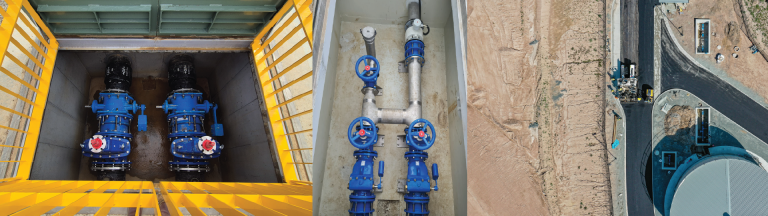
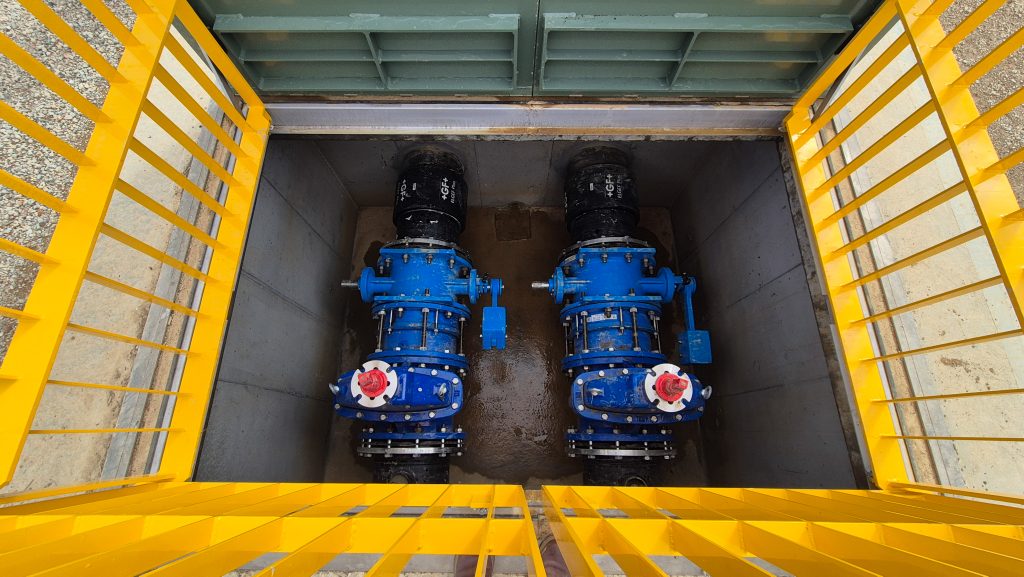
A typical pump discharge line includes a check valve immediately downstream of the pump, followed by a gate valve. This arrangement is deliberate. The check valve prevents wastewater from flowing back when the pump stops, while the gate valve isolates the rising main, allowing safe removal and maintenance of the check valve.
Without proper isolation, operators risk uncontrolled discharge and sewage exposure. Simply put, the gate valve makes maintenance safe.
Gate valves are primarily used to isolate pump discharge lines, scour return lines, bypass connections, and sections of pipework within valve chambers. They are designed to be either fully open or fully closed.
Smaller valves (up to DN200) are typically operated with handwheels, while larger valves often use key-operated stems, making them practical in confined spaces. Ductile iron remains the preferred material for wastewater and stormwater applications due to its strength and durability, while protective coatings help prevent corrosion. Resilient seated valves provide reliable shut-off, and flanged connections simplify installation and future maintenance.
Check valves, or non-return valves, prevent reverse flow and reduce hydraulic shock. Two common types are:
Additional features such as no-flow limit switches can confirm valve position and detect fault conditions, providing an extra layer of protection for critical infrastructure.
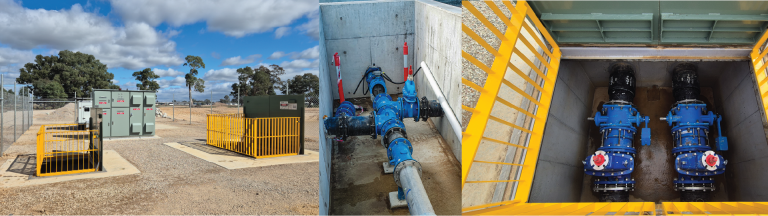
Maintenance teams often encounter fully pressurised discharge lines upstream of check valves. Without isolation, removing a valve can be hazardous. Properly installed gate valves prevent uncontrolled discharge and wastewater exposure, turning a high-risk task into a safe, controlled procedure.
The same principles apply to scour return lines and temporary bypass connections used during planned or emergency maintenance. Effective isolation ensures these activities can be completed safely and efficiently.
Large valves require adequate support to prevent strain on pipework and maintain alignment. Common solutions include concrete plinths, fabricated stainless-steel frames, and adjustable supports.
Dismantling joints are equally important, allowing valves to be removed and replaced without cutting pipework — a significant advantage in restricted valve chambers.
Valves play a critical role in the safety, reliability, and maintainability of pump stations. The correct selection, installation and design, supports safe maintenance, protect operators, and extend asset life.
At QMAX Pumping Systems, we design and deliver pump station solutions with long-term performance and operator safety in mind. From valve selection and coatings to supports, access, and maintenance considerations, every detail is engineered to ensure reliable, efficient operation for years to come.
If you are planning a transfer or pump station project, speak with the QMAX team to explore how we can support your next project.