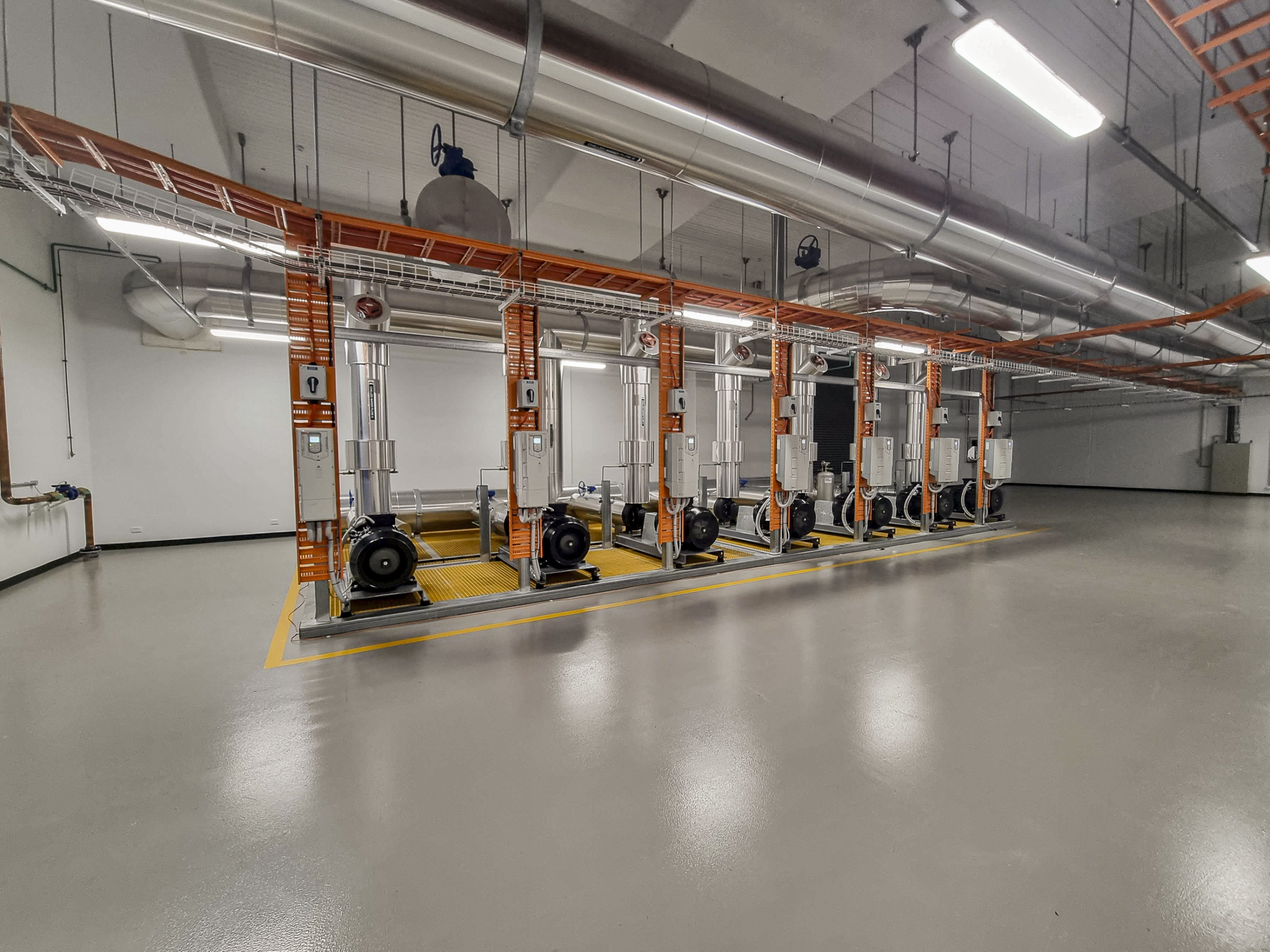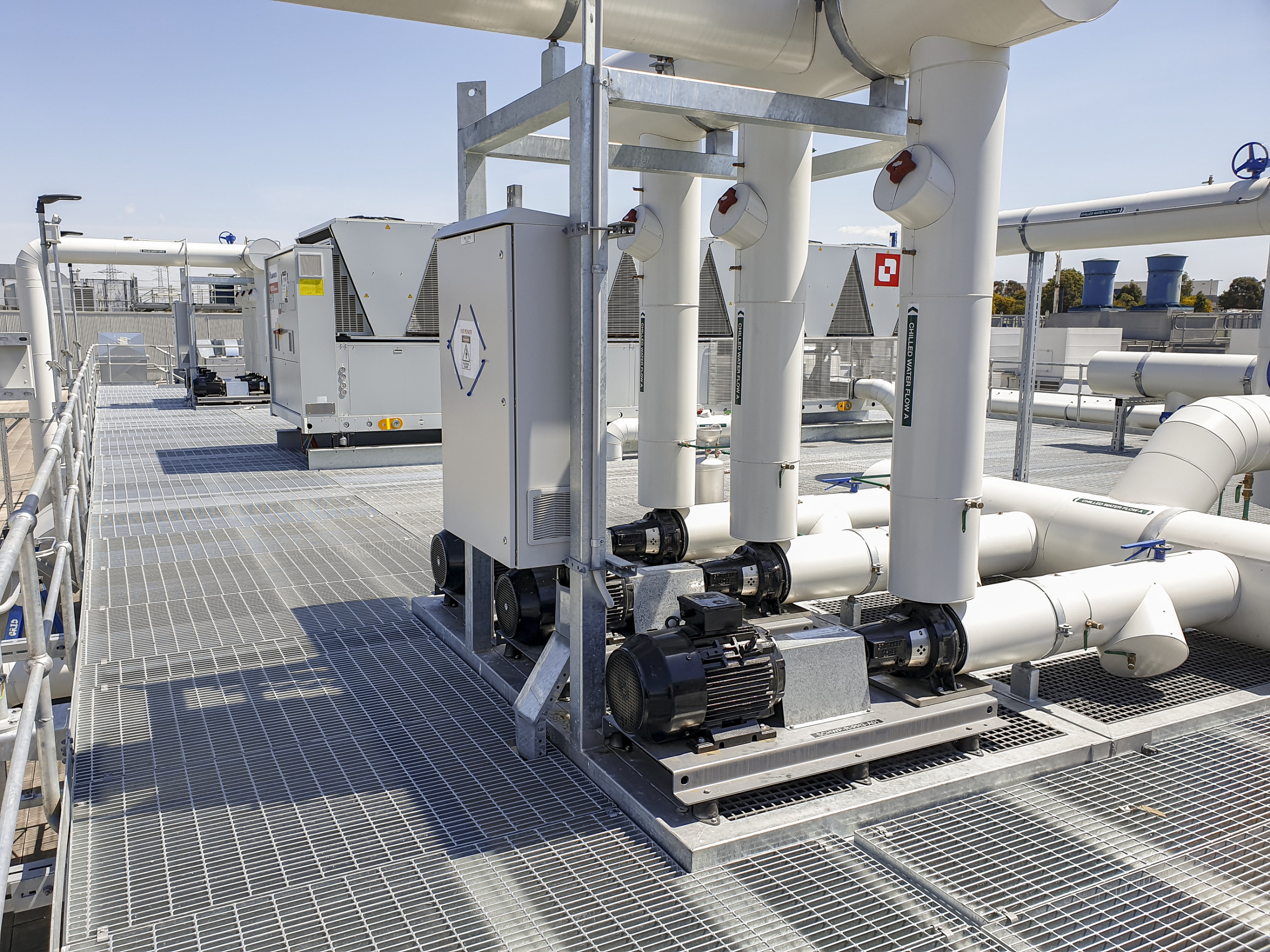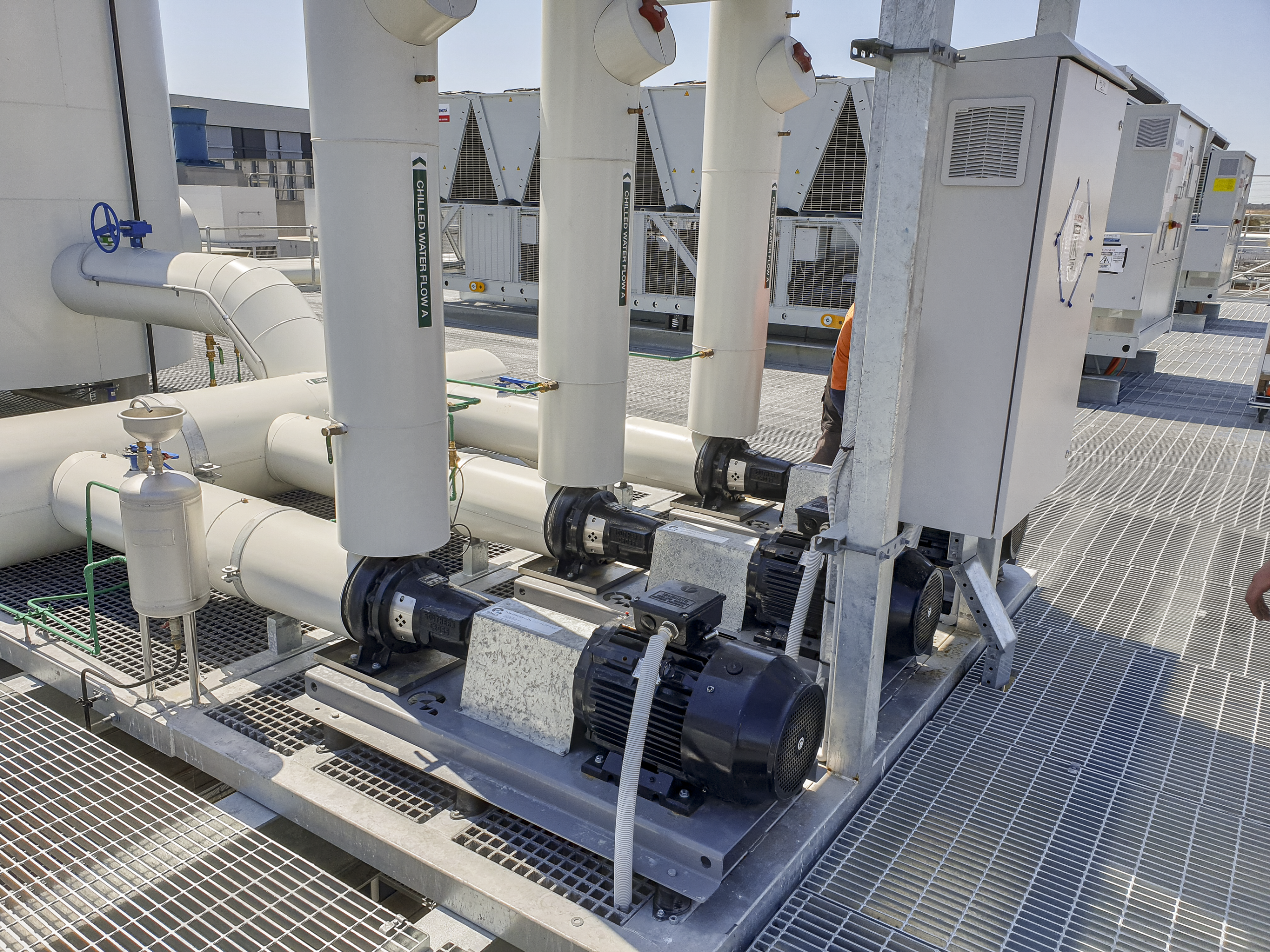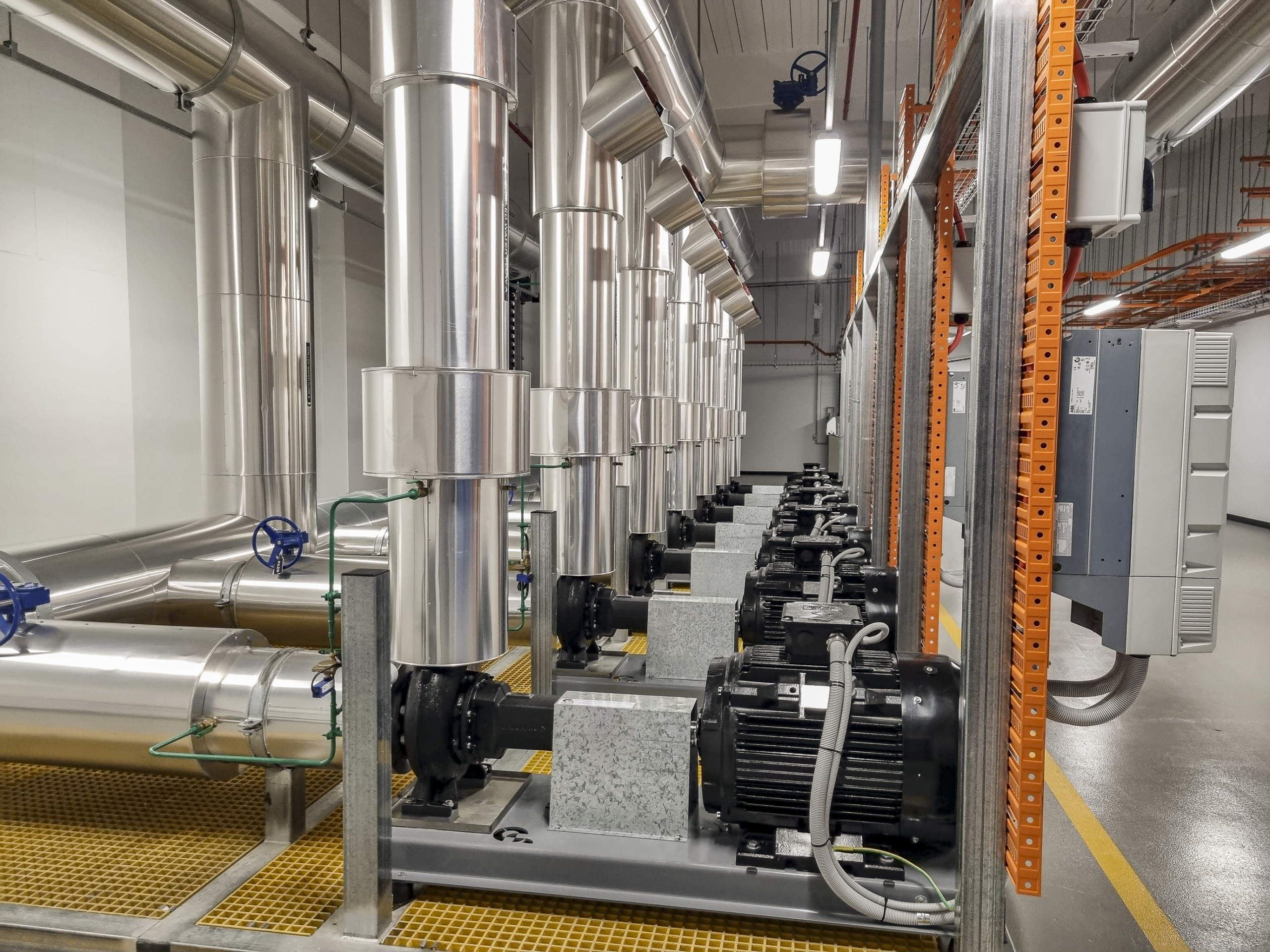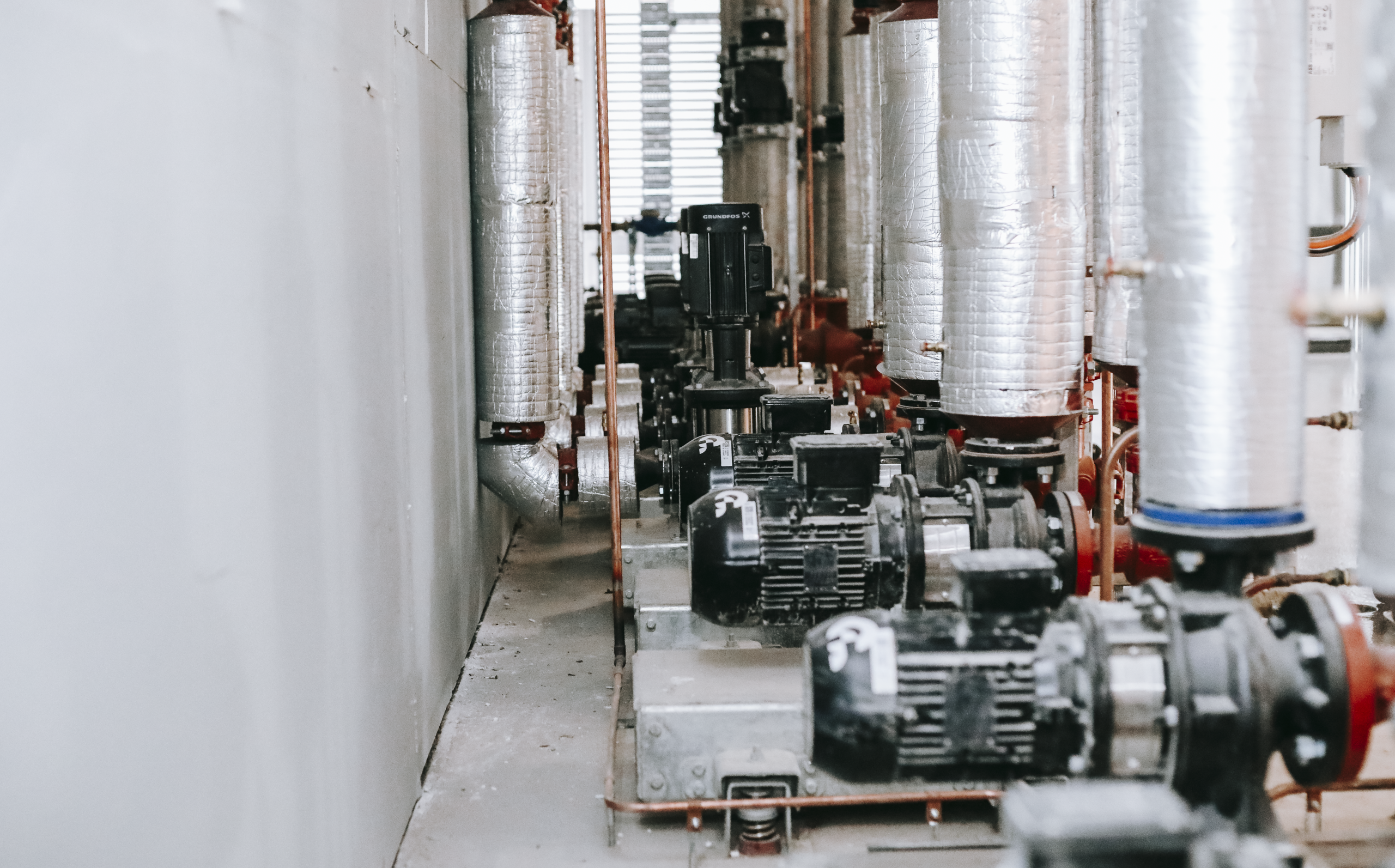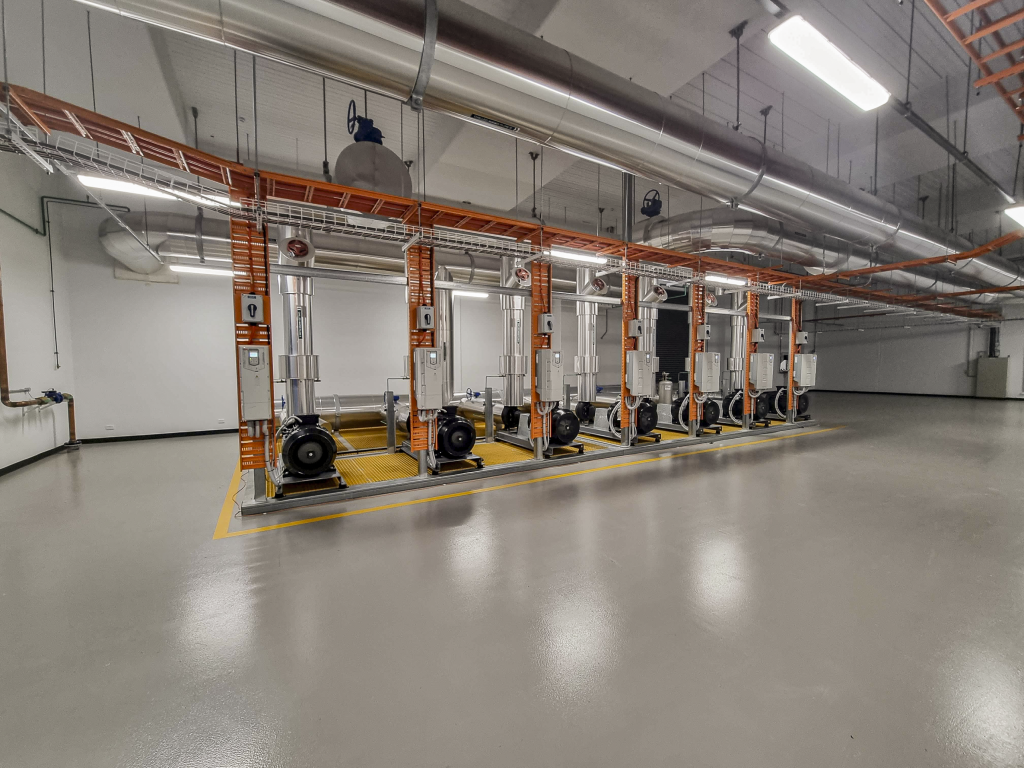
QMAX’s Commercial Building Services (CBS) division delivers engineered pumping solutions for commercial buildings across Australia, including cooling water, condenser water and pressure boosting systems. Alongside selecting the right equipment, correct assembly, installation and commissioning are essential to achieving reliable performance. Pump and motor alignment is a critical part of this process, helping minimise premature wear, reduce vibration and support long-term equipment reliability.
Long-coupled, skid-mounted pump sets use a coupling to connect the motor shaft to the pump shaft. For the assembly to operate correctly, the shafts must be accurately aligned.
There are two main types of misalignment:
Even minor misalignment can place additional stress on rotating components. While couplings are designed to accommodate limited movement, they cannot compensate for incorrect alignment.
Common consequences include:
For commercial buildings where pumps may operate for extended periods, these issues can affect equipment reliability, maintenance costs and system availability. Correct alignment before commissioning helps reduce the risk of avoidable problems throughout the equipment’s service life.
Correct shaft alignment is only part of the equation. The way a pump connects to the building’s pipework also influences its performance and reliability.
Where appropriate for the application, flexible connectors can help manage vibration and accommodate movement between the pump and connected pipework.
Their benefits can include:
Flexible connectors must be selected to suit the operating pressure, temperature, pipe diameter, fluid compatibility and expected movement. They should not be used to compensate for poorly supported pipework, incorrect installation or excessive pipe strain.
Correct pipework support and installation remain essential to protecting the pump casing, bearings and alignment.
For commercial building services applications, reliable performance depends on the complete pump set and how it is assembled, connected and commissioned.
QMAX considers these requirements as part of delivering engineered pumping solutions for commercial buildings.
Precision Alignment
Accurate pump and motor alignment helps ensure the shafts operate within the manufacturer’s specified tolerances. Precision alignment equipment, including laser alignment tools where appropriate, can be used to measure shaft positions and guide adjustments.
Alignment should also be verified following installation and whenever maintenance or changes to the equipment could affect the results.
Correctly Specified Connections
Flexible connectors and pipework connections must suit the requirements of the application. Considering operating conditions, pressure ratings and expected movement helps reduce unnecessary loads on the pump and supports reliable operation.
Manufacturing and Commissioning
Attention to detail during manufacturing, installation and commissioning helps identify potential issues before equipment enters service.
Depending on the system and project requirements, commissioning checks may include alignment, operating pressures, flow, vibration and noise. Addressing issues before handover helps reduce the risk of avoidable faults and subsequent maintenance.
Pump and motor alignment, baseplate stability and correct pipework connections all contribute to the performance of a completed pumping system.
For commercial building services, getting these details right from the outset can help minimise premature wear, reduce maintenance requirements and support reliable operation over the life of the equipment.
QMAX supplies engineered pumping solutions for commercial building services applications, including cooling water, condenser water and pressure boosting systems.
Contact the QMAX team to discuss your project requirements.